
Top Dentist Serving St. Peters
Oral Surgery: Routine and Surgical Tooth Extractions in St. Peters, MO
Gentle, Compassionate Care When a Tooth Must Be Removed
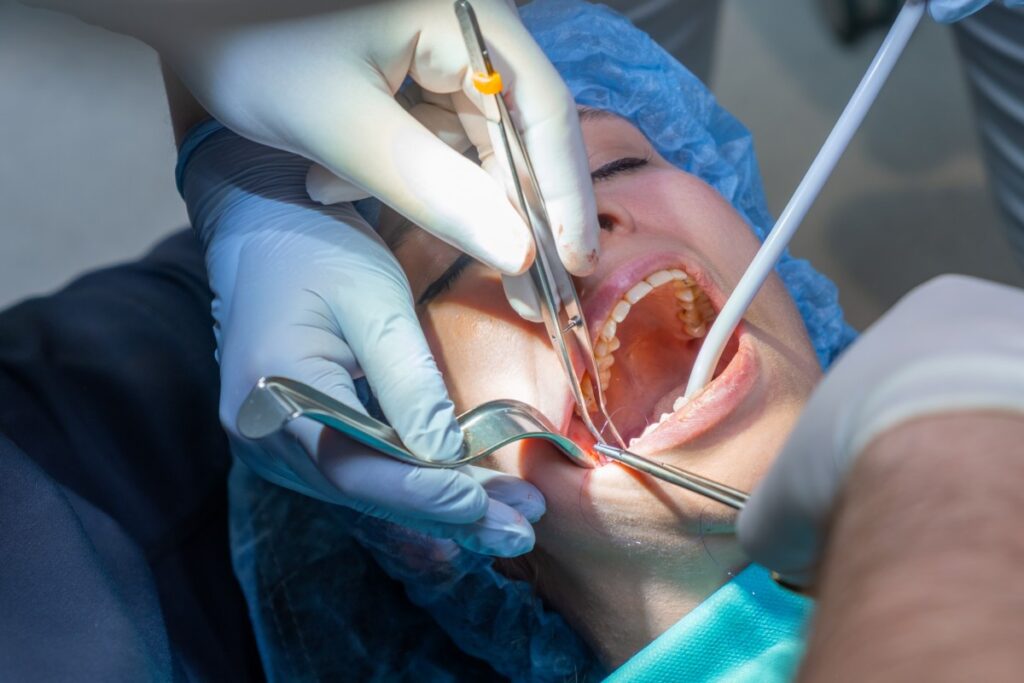
When Is a Tooth Extraction Necessary?
Common reasons for tooth extraction include:
- Severe decay or infection that cannot be repaired
- Advanced periodontal (gum) disease leading to bone loss
- Broken or fractured teeth below the gumline
- Overcrowding before orthodontic treatment
- Impacted or partially erupted teeth causing discomfort
- Preparation for dentures or other prosthetics

Need To Schedule OR Have A Question?
Routine vs. Surgical Extractions
Routine Extractions
A routine extraction is performed on a tooth that is visible and easily accessible above the gumline. After numbing the area, the tooth is gently loosened and removed using specialized instruments. This procedure is typically quick and straightforward, with minimal recovery time.
Surgical Extractions
A surgical extraction may be required when a tooth is broken, severely decayed, or has not fully erupted (such as a partially impacted wisdom tooth). During this procedure, a small incision may be made in the gum to access the tooth, and sometimes it’s sectioned into smaller pieces for safe removal.
Surgical extractions are carefully planned using digital X-rays, allowing us to see the tooth’s roots and surrounding bone structure with precision. This helps us perform the extraction efficiently and minimize trauma to nearby tissues.
If a case is particularly complex – such as fully impacted wisdom teeth or extensive bone involvement – we’ll refer you to a trusted oral surgery specialist to ensure the highest standard of care.
Your Comfort Is Our Priority
Local Anesthetic and Nitrous Oxide Sedation
Before beginning, we’ll fully numb the treatment area so you won’t feel pain during the procedure. For added comfort, we offer nitrous oxide sedation (laughing gas) to help you relax. Nitrous oxide is safe for both adults and children and wears off quickly, allowing you to return to normal activities soon after your visit.
Our experienced team takes the time to ensure you feel at ease every step of the way. You’ll always know what to expect before, during, and after your procedure.
Advanced Technology for Safer, More Precise Care
We use digital X-rays to plan every extraction with accuracy. This technology helps us assess tooth position, root shape, and bone density while significantly reducing radiation exposure compared to traditional film.
Our digital imaging and careful planning allow for smoother extractions, less discomfort, and faster recovery.
What to Expect During the Procedure
- Comprehensive Exam and Imaging – We’ll start with a detailed exam and digital X-rays to confirm that extraction is the best treatment option.
- Numbing and Sedation – The area around the tooth will be gently numbed with a local anesthetic, and nitrous oxide sedation can be provided if desired.
- Tooth Removal – Using specialized instruments, we’ll carefully loosen and remove the tooth, preserving as much surrounding bone and tissue as possible.
- Cleaning and Care – The area is cleaned and gauze is placed to control any minor bleeding. Stitches may be used if necessary for surgical extractions.
- Post-Operative Instructions – You’ll receive detailed instructions on caring for the extraction site and managing any temporary soreness or swelling.
Recovery and Aftercare
Here are a few helpful tips:
- Keep gentle pressure on the gauze pad for 30–45 minutes after your procedure
- Avoid rinsing, smoking, or using straws for the first 24 hours
- Eat soft foods and avoid chewing near the extraction site
- Keep your head elevated when resting
- Take any prescribed or recommended pain relief as directed
- Gently brush and floss other areas of your mouth, avoiding the site until it begins to heal
Replacing Extracted Teeth
Depending on your needs, we may recommend:
- A dental implant crown (in partnership with a local implant specialist)
- A dental bridge supported by neighboring teeth
- A partial denture prosthesis for multiple missing teeth